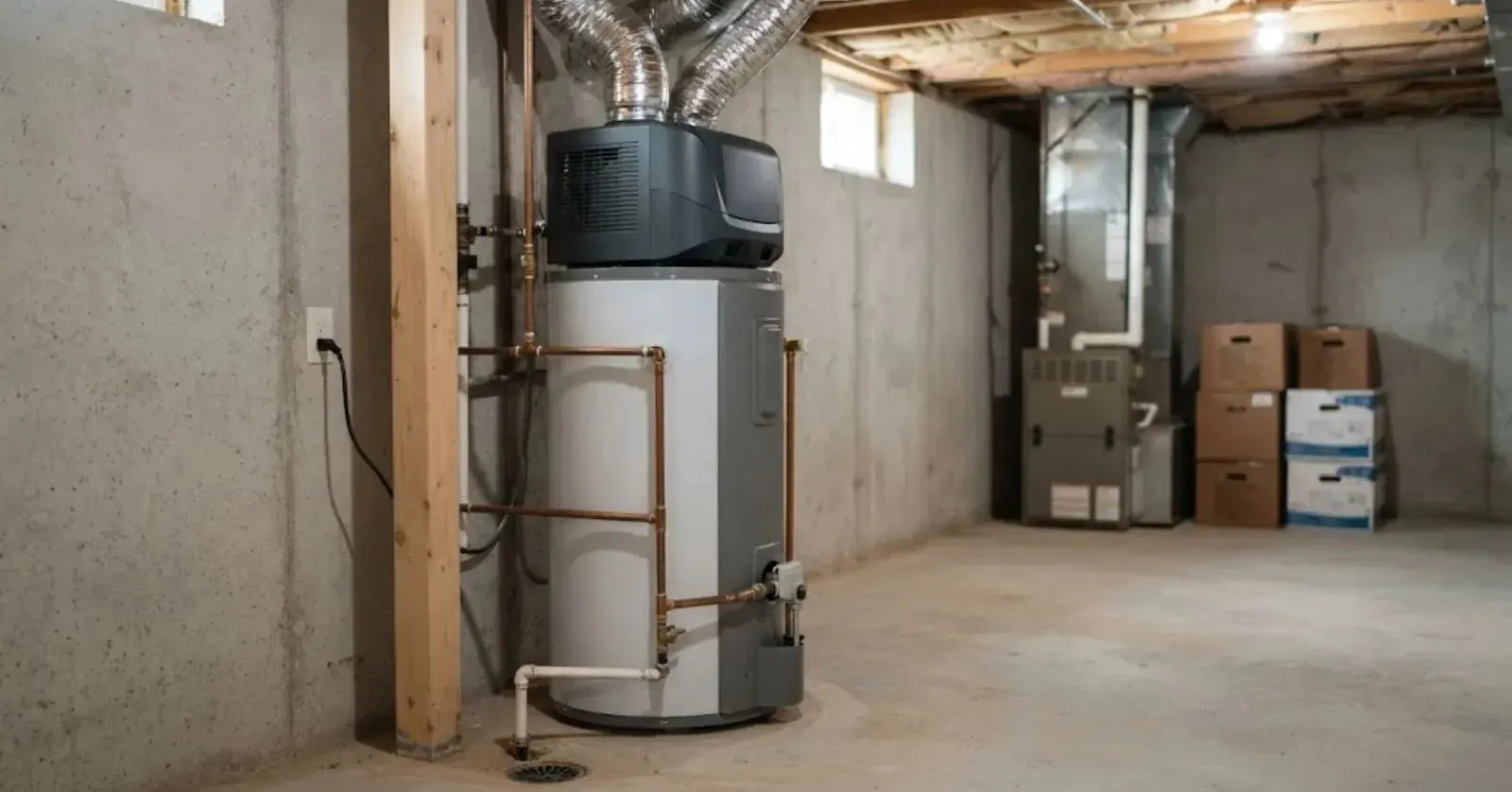
Start with the fuel: gas, electric or something else
Water heater installation means setting a new tank or unit, connecting water, fuel and venting, and installing the safety devices that keep it from overheating or over-pressurizing. In Shelbyville, Indiana the first decision is almost always the fuel, because it controls everything downstream.
A gas heater needs a gas line, a shutoff, a flue and enough air to burn. An electric heater needs a dedicated 240-volt circuit, normally 30 amps for a typical residential tank, and no venting at all.
Gas tank
- Faster recovery after a big draw
- Needs a flue to the chimney or a sidewall vent
- Needs a gas shutoff and a sediment trap
- Works through a power outage if it has a standing pilot
Electric tank
- No flue, so it can go in tighter spaces
- Needs a 240-volt circuit with the right breaker
- Slower recovery, bigger tank often helps
- Hybrid heat pump versions need airflow and a condensate drain
Switching fuel is possible but it is a project, not a swap. If a tank has already failed, our water heater replacement page covers the same-day route instead.
Sizing, space and the details that get missed
Tank size
A 40 gallon tank suits two to three people. A family with teenagers or a big tub usually does better with 50 gallons or more.
Clearance and access
Basement stairs, narrow doors and crawlspace hatches decide what physically fits. We measure before ordering.
Drain pan
Tanks above living space or finished floors should sit in a pan piped to a drain or outdoors.
Shutoff valves
A full-port ball valve on the cold supply makes every future service call quicker.
Combustion air
A gas heater in a sealed closet starves for air. Louvered doors or ducted air fix it.
Venting and gas: where safety is decided
A gas heater must vent every exhaust gas outdoors. A natural draft unit relies on a rising flue with a continuous upward pitch. A power vent or direct vent unit uses a fan and PVC or stainless pipe through a sidewall.
A bad vent can spill carbon monoxide into the house, so we check draft with a smoke pencil or a combustion analyzer once the heater fires. Keep a working CO detector on every level.
Gas storage heaters of 75,000 Btu per hour or less are certified to ANSI Z21.10.1. Venting and combustion air follow NFPA 54, the National Fuel Gas Code, the Indiana Plumbing Code and the maker's manual. Read the rating plate and manual for the standard your tank was built to.
If you smell gas at any point
Leave the building, do not flip switches, and call 911 and your gas utility from outside. Do not try to find the leak yourself. Call a plumber only after the utility says the line is safe.
Safety checks before you use the new heater
Go through these with the plumber before they leave.
- The relief valve discharge pipe points down, is not capped, and ends within about six inches of the floor or in a drain.
- The thermostat is set to about 120 degrees Fahrenheit, the setting the US Consumer Product Safety Commission recommends to reduce scald risk.
- A carbon monoxide alarm is on each level and tested, and the draft check was done after the heater fired.
- Gasoline, paint thinner and aerosols are stored well away from a gas heater, since their vapors can ignite.
- Every gas joint passed a leak test and nothing smells.
- For an electric unit, the breaker is labeled, and any panel work was done by a licensed electrician.
Expansion tanks and the T&P relief valve
Heating water makes it expand. In an open system that extra volume pushes back into the water main. If your home has a check valve, backflow device or pressure-reducing valve on the incoming line, the water has nowhere to go and pressure spikes each time the heater runs.
A small thermal expansion tank on the cold line absorbs that pressure, and the pre-charge in the tank must be set to match your house pressure with a gauge. Without it, relief valves drip and fittings loosen over time.
The temperature and pressure (T&P) relief valve is the last line of defense against a tank overheating. Its discharge pipe should run downward, end within six inches of the floor or to a safe drain, and never be capped, plugged or reduced in size. A relief valve that discharges is telling you something, so call for water heater repair rather than tightening it.
Relief valves for hot water supply systems are made to ANSI Z21.22, and the valve's ratings must suit the tank it protects.
Install day, step by step
Walk the site
Fuel supply, vent route, pipe material, floor drain location and electrical panel capacity are checked and noted.
Set and level the tank
On a pan or a stand, away from combustibles, with working clearance in front of the controls.
Connect water and safety devices
Flexible connectors or copper, shutoffs, expansion tank, T&P valve and a discharge line to a safe termination.
Connect fuel and venting
Gas piping with a drip leg and a leak test on every joint, or a 240-volt whip on a properly sized breaker. Vent pipe is sloped, supported and sealed.
Fill, test and start up
Fill completely, purge air, light or energize, set the thermostat and check draft and pressure before we leave.
Permits for a heater install in Shelbyville
Within the city of Shelbyville, only registered plumbing contractors can apply for plumbing permits, and a homeowner working on a home they own and live in must get a permit first. That rule comes from the city's own contractor and building pages. Outside city limits, in Shelby County and the nearby towns, permit rules vary, so ask the building department that covers your address.
If you are thinking about skipping the tank altogether, our tankless water heater page explains what changes in gas sizing and venting. For a house in Waldron or other county addresses, tell dispatch so we know which office to check.
What shapes the price of an install
A quote that does not ask about venting and the gas or electric supply is a guess. These are the factors we price.
Insurance does not usually pay to upgrade or install a water heater. It may help if an old unit fails and damages floors, so read your policy and keep receipts and photos.
Ready to plan the install?
Call and tell dispatch the fuel, tank size and where it sits. We will book an appointment, with same-day slots when available.
Water heater installation questions answered plainly
Start with what the house already has. Gas is faster at recovery but needs a flue and combustion air. Electric needs a 240-volt circuit and no venting. Conversion is possible but changes the scope.
Count peak hot water use, such as showers and a dishwasher running together. A 40 gallon tank fits a small household and 50 gallons or more suits larger ones. We size from your actual use.
If your plumbing is a closed system with a check valve, backflow preventer or pressure-reducing valve on the main, yes. We test and set the tank pressure with a gauge during install.
Downward, to a floor drain or outdoors, ending within about six inches of the floor. It should never be capped or reduced in diameter.
In the city of Shelbyville only registered plumbing contractors can pull plumbing permits, and homeowners on their own home must get a permit first. Other jurisdictions vary, so ask the building department.
Yes, with a power vent or direct vent model sized for the run. It needs a clear termination away from windows and air intakes, and the pipe must be sloped and sealed.
It can be if the space has enough open air, usually a room of reasonable size, and a place for condensate to drain. A tiny closet starves it and it falls back to electric elements.