When a clogged drain is an emergency
A slow drain can wait until morning. A drain that sends water back up into a tub, a floor drain or a basement shower cannot. If more than one fixture is affected at the same time, the blockage is usually past the branch line and in the main drain, and every flush or load of laundry adds to the mess.
Our dispatch line runs 24/7 for exactly this. While you wait, stop running water, keep the kids and pets out of any standing water, and read the prep card below. When a line needs more than clearing, such as a missing cleanout or a trap that was never vented, the fix follows the Indiana Plumbing Code, which is the standard our work is held to.
Water comes up in the tub
When you flush or run the washer and the tub gurgles or fills, the main drain is partly or fully blocked downstream of the bathroom.
Kitchen sink will not drain
Standing water with a greasy film points to a grease and food plug in the 1.5 inch line under the sink or just past the wall.
Every drain is slow
One slow fixture is a branch problem. Every drain slow at once means the main line is restricted.
Gurgling and sewer smell
Air pushed back through a trap means water has nowhere to go. A dry trap smells too, so run the fixture first.
Floor drain or yard drain stops
Basement floor drains and outdoor yard drains clog with silt, leaves and lint. Water pooling around either needs clearing before rain arrives.
While you wait for the plumber
Four moves that keep a clog from turning into a flood.
Stop adding water
Hold off on flushing, showers, the dishwasher and the washing machine. Every gallon you add has to go somewhere, and right now it goes onto the floor.
Do not pour chemical cleaner
Caustic drain openers sit in a stopped pipe and burn skin and fixtures. They also make a plumber's job riskier because the standing water is now hazardous.
Find the cleanout
Look for a capped 3 or 4 inch fitting in the basement, crawlspace or yard near the house. Do not open it if water is backed up behind it, but tell dispatch where it is.
Protect the floor
Move rugs, boxes and electronics off wet areas. Stay clear of outlets near wet areas, and call a licensed electrician if water has reached them.
Kitchen sink clogs: grease, food and the garbage disposal
Kitchen drains are the most common call we get. Cooking fat goes down as a liquid, cools in the 1.5 inch trap arm, and lines the pipe wall with a waxy layer that catches coffee grounds and rice. A few months later the pipe has the opening of a straw.
If your sink has a disposal, the clog is often just past it. A plumber removes the trap, runs a small cable through the wall stub, and checks that the disposal itself is not jammed. For disposal faults, see garbage disposal repair.
| Location | Typical cause | What clears it |
|---|---|---|
| Under the sink trap | Grease, food scraps | Remove and clean the trap, short hand cable |
| Wall stub to main stack | Hardened grease, soap scum | Drum machine with a 3/8 inch cable |
| Tub or shower line | Hair and soap in the trap or overflow | Small cable with a barbed tip, then flush hot water |
| Main building drain | Roots, paper buildup, bellied pipe | Larger cable with a cutter head, then camera |
| Floor or yard drain | Silt, leaves, lint | Cable or jetter, then check the discharge |
Snaking, cabling and when a camera comes next
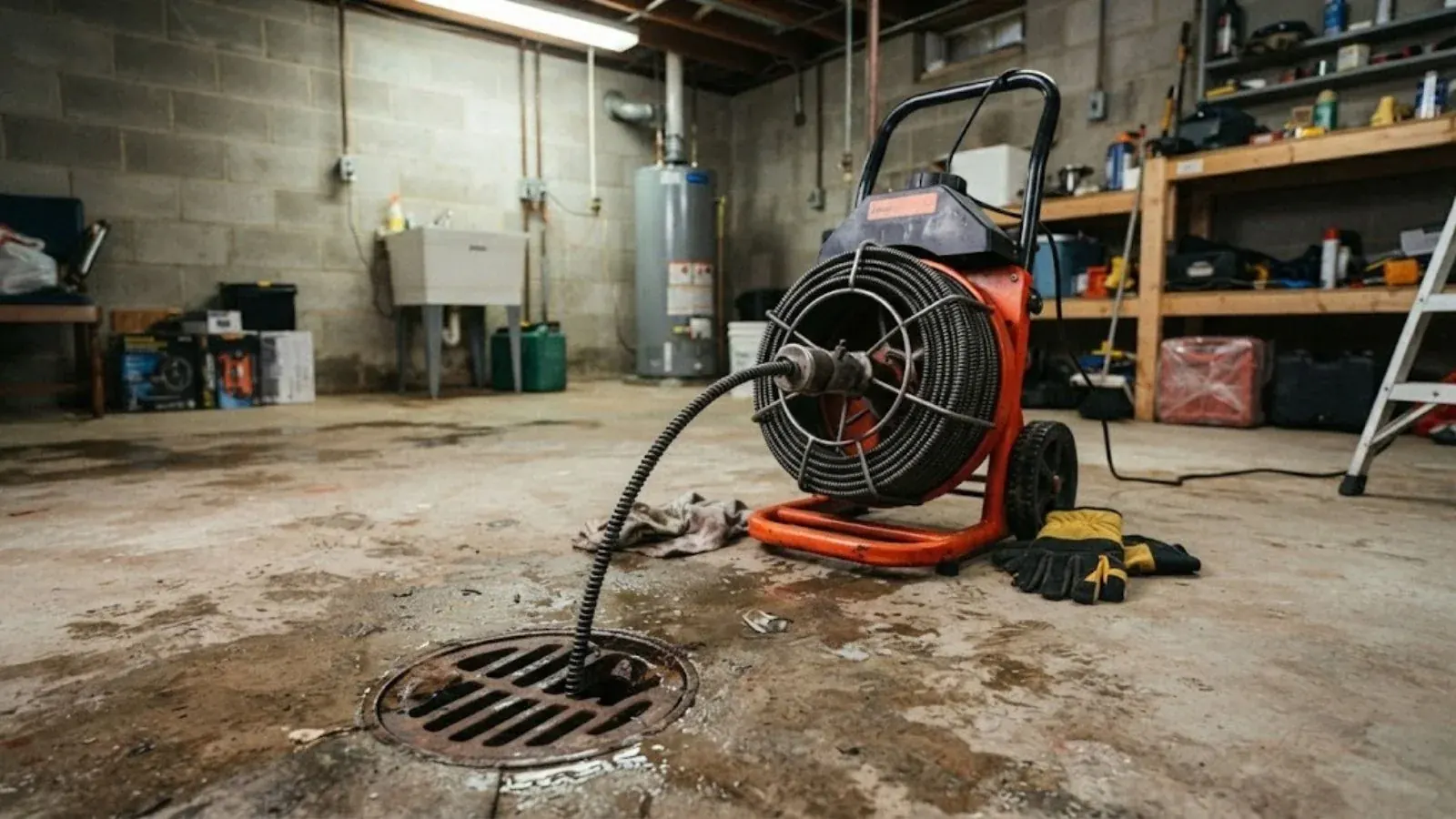
Snaking and cabling are the same family of tools at different sizes. A hand auger handles a sink or tub. A drum machine pushes a spring cable of 3/8 to 3/4 inch through a main line, and the head you choose matters: a straight-ahead bit punches through, a cutter head scrapes the pipe wall clean.
Cable alone is enough when
- One fixture is slow and the others are fine
- The clog was sudden after a known cause
- Water drops fast once the plug breaks
- It has been a year or more since the last clog
Add a camera when
- The same drain clogs again within weeks
- The cable stops at the same spot every time
- You hear gurgling at several fixtures
- Debris on the cable looks like soil, scale or pipe fragments
A cable opens a hole through the blockage. It does not scrub the whole pipe. If the line keeps closing, hydro jetting cleans the full wall, and a camera shows whether the real problem is a crushed or offset pipe that needs sewer line repair.
Drain backing up now?
Tell dispatch which fixtures are affected and whether water is on the floor. That tells the plumber which cable to bring.
Why older Shelbyville homes clog more often
Pre-1940 houses, like many of the 373 buildings in the West Side Historic District, often still have cast iron or clay drains with rough interiors. Scale builds up inside cast iron, and every rough patch catches paper and grease. Roots find the joints in clay.
That matters when you buy cable service for a house like this: ask for a camera look after the first clearing, so you learn if this is an occasional cleaning job or a pipe replacement plan.
Newer homes clog for different reasons. Wipes sold as flushable, builder-grade low-slope drain runs and a missing cleanout are the usual culprits. Whichever applies, tell the plumber when the last clog happened. Dates narrow the cause faster than any tool. Plumbing codes such as the Indiana Plumbing Code call for accessible cleanouts, so ask for one if your drain has none.
What changes the price of clearing a drain
We quote by the work, not by a flat guess over the phone. Dispatch asks what is backing up so the plumber arrives with the right machine, and you hear the price before work starts.
Homeowner policies usually pay for sudden water damage from a backup only with a sewer or water backup endorsement, and they rarely pay to clear the clog itself. Check your policy and ask your agent before you assume coverage.
Keeping drains open after the cleaning
- Wipe pans before washing and bin the grease instead of pouring it down the sink.
- Use a hair catcher in every shower. Hair is the main tub clog.
- Flush only toilet paper. Wipes labelled flushable do not break down in a 3 inch line.
- Run hot water for a minute after the dishwasher drains to carry soap film along.
- Keep the cleanout cap reachable and tell the plumber where it is.
If a clog returns inside a month, treat it as a pipe problem and not a bad luck problem. Our team can also handle toilet repair when the clog is at a fixture, and we serve nearby towns such as Morristown too.
Drain cleaning questions from Shelbyville homeowners
Yes. The line is staffed 24/7, including nights, weekends and holidays. Dispatch asks which fixtures are backing up and whether water is on the floor, then sends a licensed plumber. Same-day appointments are offered when available and you get a price before work starts.
Usually grease that cooled and coated the pipe wall. A cable opens a hole through it, but the wall stays coated, so the drain narrows again. Jetting removes the film, and a camera tells you whether the pipe is also bellied or rough.
For a single fixture clog, a cable is usually enough. For a main line with roots or heavy grease, we move to a larger cutter head or jetting. The plumber explains which and why before starting.
We advise against it. Caustic products can sit in a fully blocked pipe, damage older fittings and splash on whoever opens the trap later. A plunger and a cable are safer.
That pattern points to the main drain, because air and water are being pushed back from the shared line. Stop using water and call. It is the clog that most often becomes a backup.
Yes. Floor drains collect lint, silt and debris, and many connect to the main line. If water rises in one when you run the washer, the main line is restricted and needs a larger machine.
If every fixture backs up and a cable from your cleanout meets a plug close to the house, it is likely on your side. If the line is clear to the property edge, ask the city sewer department about the main. Camera footage helps show which.