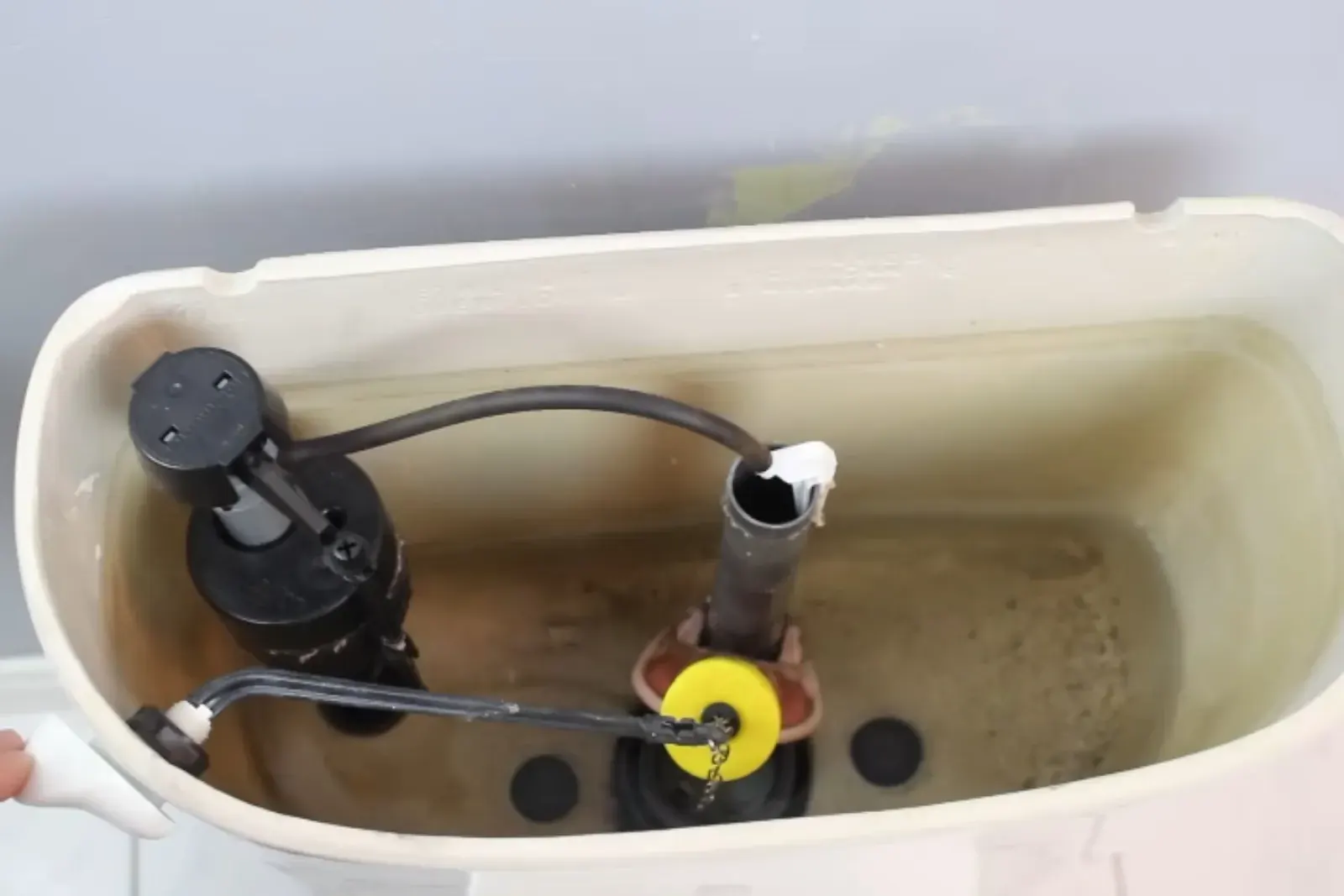
Overflowing toilet: what to do in the first minute
Do not flush again. Lift the tank lid and push the flapper down into its seat to stop more water entering the bowl. Then turn the oval or round stop valve on the wall or floor behind the toilet clockwise until it stops.
Once the water is stopped, you can look at what caused it. One clogged toilet usually means a clog in that toilet's trap. If the tub gurgles or another drain backs up too, the clog is farther down in the house drain, and a plunger will not reach it.
Likely a toilet-only clog
- Only this bowl rises or drains slowly
- A flange plunger or closet auger usually clears it
- Other drains run normally
- Often follows wipes, paper wads or a toy
Likely a main drain clog
- Tub, shower or floor drain gurgles or backs up
- Multiple toilets act up together
- Plunging makes no difference
- Needs cable or jetting, see sewer line cleaning
Signs a toilet needs repair or replacement
Runs after the flush
A warped flapper or a tired fill valve lets water slip from the tank into the bowl all day.
Phantom flush
The toilet refills on its own every so often. The flapper leaks slowly.
Weak flush or clogs often
Clogged rim jets, a low tank level, or a partial clog in the trap.
Water around the base
A worn wax ring or a loose closet bolt. The leak may be soaking the floor beneath.
Rocking bowl
A loose seat on the floor flange. Left alone, the wax seal fails and leaks follow.
Cracked tank or bowl
A hairline crack that seeps cannot be mended. Replace the unit.
Running toilet: finding which part is wasting water
Add a few drops of food coloring to the tank and wait 15 minutes without flushing. If color shows in the bowl, the flapper leaks. If the water level rises to the overflow tube and keeps hissing, the fill valve or float is set too high or is failing.
The cure is often a pair of inexpensive parts. Some one-piece models with a broken flush lever or a sealed tank need a plumber, since matching parts is harder.
Toilet overflowing or leaking now?
Close the stop valve and call the 24/7 line. We offer same-day visits when available and after-hours toilet repairs.
Leaks at the base and a failing wax ring
A toilet sits on a wax ring that seals the bowl to the drain flange. When the ring fails or the toilet rocks, sewage-smelling water seeps out at the base each flush. The damage hides under the floor, so a stained or soft floor next to the toilet is a warning.
Fixing it means pulling the toilet, replacing the ring, checking the flange for cracks, and resetting the bowl level. If the subfloor has gone soft, that needs repair before the toilet goes back. Old houses with cast iron closet bends sometimes need the flange re-secured as well.
Toilet installation and replacement
A toilet that needs frequent attention is a candidate for replacement. Modern 1.28 gallon per flush bowls clear waste better than many old 3.5 gallon models while using less water. The rough-in distance from the wall to the drain center, usually 12 inches, decides which models fit.
A plumber checks the flange height, the shutoff valve, and the supply line before setting the new bowl. If the shutoff is old or seized, it is replaced at the same visit. See faucet and valve repair for how we handle stuck valves.
Two labels help when you shop. EPA WaterSense marks toilets that use 1.28 gallons per flush or less and pass flush performance testing, while the federal limit for new toilets is 1.6 gallons. ASME A112.19.2 is the standard for vitreous china fixtures, and ASSE 1002 covers anti-siphon fill valves, which stop tank water from being drawn back into the supply pipe.
How we diagnose a problem toilet
Water and shutoff check
Confirm the stop valve works and the supply line is intact before touching the bowl.
Tank inspection
Look at the flapper, chain, fill valve, float height, and overflow tube.
Trap and drain test
Use a closet auger on the bowl and test other drains for signs of a main line clog.
Base and flange check
Rock test for movement, look for staining, and pull the toilet if a leak is suspected.
Pick the repair
Present the cost of a repair against a replacement so you decide with the numbers in front of you.
While you wait for the plumber
Four moves that protect the floor.
Stop the water
Turn the stop valve behind the toilet clockwise. If it will not turn, close the main.
Do not flush or keep plunging
More water means more spill. Wait for the level to fall.
Contain and ventilate
Lay towels along the base. Wear gloves, because overflow water can carry waste. Keep kids and pets out.
Check other drains
Run a sink in another bathroom for a moment. If it gurgles, tell dispatch it may be the main drain.
What changes the price of toilet repair
Toilet work ranges from a ten-minute part swap to a full floor repair.
Homeowner policies often cover sudden overflow water damage but not a toilet that failed from wear. Sewage backups usually need a specific endorsement, so check your policy.
Older plumbing and toilet drains
Homes built before about 1940 in the West Side Historic District, which was developed from roughly 1853 to 1939, may have cast iron or clay drain lines under the bathroom. A toilet that clogs repeatedly there might point to a damaged drain, not the bowl. Ask for a camera look at the drain if clogs return, see sewer camera inspection.
Source type: National Register of Historic Places district listing for the West Side Historic District
Calls from Fairland and the rest of Shelby County reach the same 24/7 line as Shelbyville addresses.
Toilet repair questions in Shelbyville
Yes. Overflowing, leaking, or backing-up toilets get a licensed plumber through the 24/7 line, with same-day service when available. Close the stop valve first and tell dispatch if other drains are also slow.
A worn flapper or a failing fill valve is the usual cause. Food coloring in the tank shows a flapper leak within about 15 minutes. Both parts are quick to replace.
It can be. Bubbling or gurgling at the bowl when you run a washer or drain a tub often means a partly blocked main drain or a vent problem. A camera shows which.
Look for a damp floor, a ring of stain, or a toilet that rocks. Dry the floor and watch for new water after a flush.
Yes, as long as the model fits your rough-in. Bring the model name, and the plumber checks the flange and shutoff first.
The clog may be deeper than the trap, or the line has damage or roots. Wipes and paper wads are common culprits. A closet auger or a camera finds the real cause.
A flapper leak can waste a surprising amount of water without making noise. A meter check with all taps off shows if the house is losing water. See leak detection for how we trace the rest.