Jet or cable? Choosing the right tool
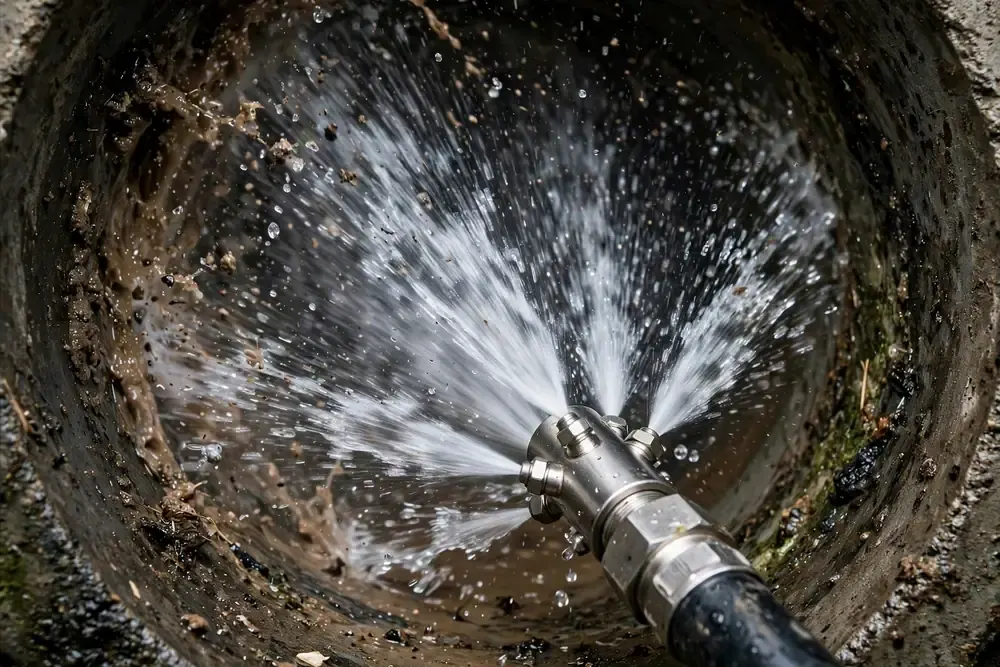
A cable cuts a hole through a clog. A jetter washes the pipe wall clean. That difference decides which tool a plumber should bring, and it is why hydro jetting is the answer when a drain keeps clogging after every cabling.
| Question | Drum cable | Hydro jetter |
|---|---|---|
| What it does | Bores a channel through the plug | Scours the full wall and flushes debris out |
| Best for | One-time clog, paper, a soft blockage | Grease, scale, packed roots, repeat clogs |
| Leaves behind | A coating of grease or scale on the wall | A clean pipe interior when done right |
| Risk | Cable can tear on a broken joint | Wrong pressure can stress a weak old pipe |
| Needs a camera first? | Helpful | Yes, always |
We run a sewer camera before the jetter goes in. Pushing several thousand PSI of water into a line you have not seen is how a worn clay pipe turns into a collapsed one. If the camera shows a broken section, the plan changes to repair and not scouring.
When a backup needs a jetter right now
Most calls start with a cable and end there. We bring the jetter when the cable comes back with clues: a rope of grease, a tangle of fine hair-like roots, or flakes of orange-brown scale that sound like rust. Those mean the wall is coated, and a hole through the middle will close up again in weeks.
If water is already on the floor, say so on the call. Dispatch will send a plumber with both tools on the truck, and you will not wait for a second trip. The 24/7 line takes these calls at night, on weekends and on holidays.
Grease buildup
Kitchen lines and any commercial kitchen drain carry fat that sets like candle wax. Jetting melts and flushes it, which a cable cannot.
Tree and shrub roots
Fine roots enter at joints and grow into a mat. A jetter with a rotating nozzle cuts and flushes them, and a cutter blade handles thicker ones.
Scale in cast iron
Old iron pipe grows rough nodules inside. These hold paper and slow flow until the line is nearly closed.
Sand, silt and debris
Floor drains and storm-connected lines collect grit. Water at force carries it out where a cable only pushes it along.
Repeat clogs
Three clogs in a year at the same drain is a pattern. Clean the whole wall and watch whether the pattern stops.
Before the jetter arrives
Steps that make the job faster and keep the damage small.
Stop all water use
Do not flush or run the washer. A jetter clears the line, but wastewater already in the pipe has to go somewhere first.
Clear the work area
Jetting needs access to a cleanout or a pulled toilet. Move stored items away from the basement wall or the yard spot near the house. Stay clear of the cleanout while the hose runs, because pressurized water and wastewater can spray back.
Note the pattern
Which fixtures are slow, how long it has been, and whether a cable was used before. The plumber reads the pattern like a map.
Keep people away from sewage
Wastewater on the floor carries bacteria. Keep kids and pets out, and do not touch it bare-handed. Open a window if the smell is strong.
Same clog, third time?
Say that on the call. A repeat clog is the textbook case for a camera and a jetter, and dispatch can schedule it around your day.
What the visit looks like
Camera look
The plumber feeds a sewer camera down the cleanout to see the clog, the pipe material and any cracks, offsets or belly.
Pressure set to the pipe
Cast iron, clay and PVC tolerate different pressure. The plumber sets the pump and chooses a nozzle: forward-firing to open the plug, rear-firing to scour and pull the hose along.
Open the clog and scour the wall
The nozzle works up and down the run, usually twice. Debris is flushed to the sewer, not left in your line.
Confirm with a second camera pass
We look again to check the wall is clean, then show you the footage if the pipe has a defect.
Footage is easier to compare when it uses common terms. NASSCO's Pipeline Assessment Certification Program (PACP) is a defect-coding system that many sewer utilities use for cracks, offset joints and roots. Asking the plumber to describe findings in those terms makes a second opinion easier to get.
Where jetting is the wrong call
Jetting helps
- Grease and soap coating in kitchen and laundry lines
- Root mats at sound joints
- Scale on cast iron that is still structurally sound
- Repeat clogs with no pipe damage
Jetting will not fix
- A collapsed or crushed pipe
- A line with a large offset joint
- A belly holding standing water
- Pipe so thin that pressure could crack it
If the camera finds a broken pipe, jetting only hides it for a while. In that case ask about sewer line cleaning on a schedule, or a repair plan, and get the footage in writing.
Downtown buildings and restaurant drains
Buildings in the Shelbyville Commercial Historic District date from about 1822 to the 1930s, so a downtown drain can be a patchwork of cast iron, galvanized steel and newer plastic. Any commercial kitchen on that line adds fat every night.
That mix is the reason we camera first and jet second in older commercial buildings: it protects the weakest section. Grease interceptors and discharge limits are usually set by local sewer use rules, so ask the sewer utility before changing a kitchen drain. If you run a kitchen, ask about a recurring jetting schedule and see commercial plumbing for grease trap and after-hours support.
What changes the price of hydro jetting
The price depends on how much pipe needs scouring and how hard it is to reach. You get a number before the plumber starts.
Standard homeowner insurance usually does not pay for jetting itself, since it counts as maintenance. Water damage from a backup is covered only with a water or sewer backup endorsement, so read your policy.
Hydro jetting questions we hear in Shelbyville
Yes. Dispatch is staffed 24/7. For a main line backup at night, we send a licensed plumber who carries cable and a camera, and bring the jetter when the camera shows a coated or rooted pipe. Same-day appointments are offered when available.
It can if done blind. That is why the camera goes first and the pressure is set to the pipe. A pipe that is already cracked or collapsed should be repaired, not jetted.
A single drain is usually quick. A full main line run with camera passes before and after takes longer. The plumber gives you an estimate once the camera is in.
No. It clears them and cuts back the mat, but roots return through the same joint. A joint repair or lining is the lasting fix, and jetting on a schedule is the stopgap.
It should not be. Water and debris flush through the line to the sewer. We set up at the cleanout and protect floors with drop cloths.
It depends on volume and whether a grease trap sits upstream. Many kitchens choose a recurring visit. Ask for an interval based on what the camera shows, not a fixed number.
Not for cleaning a line. Pipe repairs are different. Permit rules vary, so ask the building department, and remember the city only issues plumbing permits to registered plumbing contractors.