When a failed sump pump is an emergency
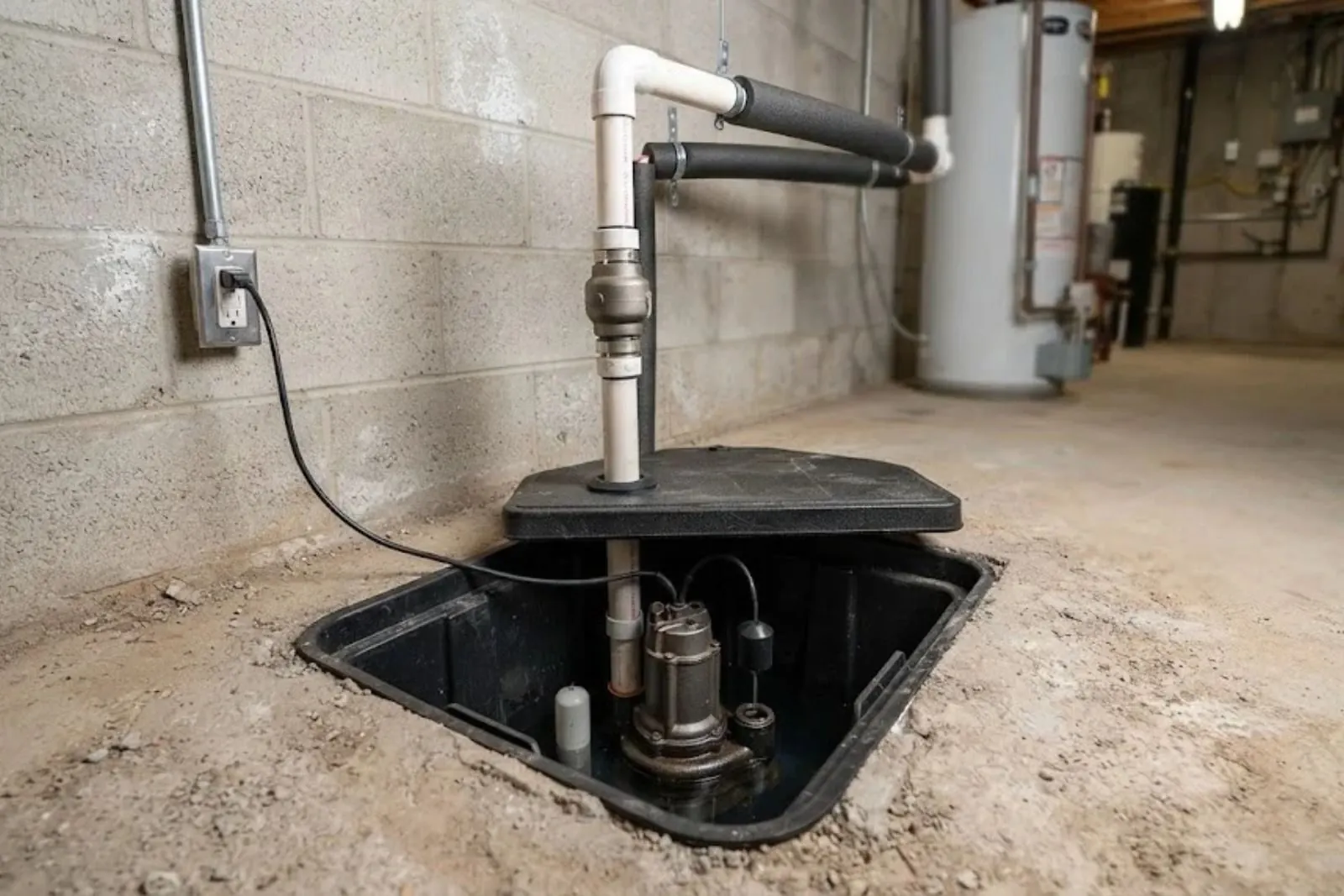
A sump pump is an electric pump that sits in a pit, called a basin, in the lowest part of a basement or crawlspace. It lifts groundwater out through a discharge pipe and sends it outside, away from the foundation. In Shelbyville, IN, in Shelby County, that one machine often decides whether a wet week stays outside the house.
Our 24/7 line is open tonight, so describe what you see and dispatch will guide you. Stand on something dry before you touch anything near the pit. Never reach into standing water if the pump or its cord is still plugged in, because that is a shock risk.
Local sewer rules and the Indiana Plumbing Code set the guidelines for where a sump discharge may go, and tying it into the sanitary sewer is commonly restricted, so confirm the route before any pipe is run.
Pump hums but moves no water
Usually a jammed impeller (the spinning vane) or a stuck check valve. Silt and small stones from the pit are the common cause.
Pump runs and runs
The pump may be undersized, the float may be stuck up, or the discharge line may be blocked or frozen outside.
Pump does not start at all
Check the GFCI outlet and the breaker first. If both are fine, the float switch or motor has likely failed.
Loud thumping or banging after each cycle
Water is falling back down the pipe because the check valve has failed or was never installed.
Water in the pit after every rain
A pit that fills within minutes of a storm tells you the water table is high. A bigger pump or a second pump may be needed.
Why Shelbyville basements depend on a working pump
Shelbyville sits at the fork of the Big Blue and Little Blue Rivers, so groundwater in low parts of town can rise close to basement floors in a wet spring. A sump pump handles that groundwater and the rain that soaks down along the foundation. It does not hold back a river that spills over its banks. If your pump is over ten years old, ask for a battery backup.
What the river record says, and what it means for your pump
The National Weather Service recorded the Big Blue River at Shelbyville cresting at 19.98 feet on April 6, 2025. That is the second highest crest on record and the highest since the March 1913 flood. The city flood page says yards near the Big Blue begin to flood at 16.3 feet, and homes near CR 100N and Boggstown Road begin to flood at 17 feet or higher.
The city also names the areas around Boggstown Road, CR 100N, Sunset Park and Bear Chase Golf Course as a high-risk flood zone. We make no claim about any particular home.
The practical point: near the river a high water table fills your pit sooner and keeps it full longer. A battery backup and a discharge line that carries water well away from the foundation matter more than pump horsepower. Check the FEMA flood zone map linked on the city page, and move valuables off the floor as the city advises.
Source type: National Weather Service Indianapolis flood summary and City of Shelbyville Flood Preparedness page
How we find out why the pump quit
Test the power
We confirm the outlet is GFCI protected, reset the breaker if it tripped, and check that the cord has no cuts. A pump on a shared extension cord is a common fault.
Lift the float
We raise the float by hand to see if the motor starts. A stuck or tangled float is a ten minute fix. A float that works while the pump does not points to the motor.
Pull and inspect the pump
We unplug it, lift it out, and look for a jammed impeller, burnt windings, or silt packed in the intake screen. Gravel in the basin is cleaned out at the same time.
Check the check valve and discharge
We test the check valve for backflow, look for the small weep hole drilled in the discharge pipe just above the pump (it prevents air lock), and trace the line outdoors.
Measure the basin
A basin that is too narrow makes the pump cycle on and off too often. Short cycling kills motors early, so we size the replacement to the pit.
Before the plumber arrives
Four moves that limit the water damage tonight.
Cut power to anything wet
If water is near outlets, extension cords or the panel, leave the basement and switch off the breaker only if you can reach the panel while standing on dry floor. Otherwise stay out and tell dispatch.
Lift what you can off the floor
Move boxes, electronics and the furnace filter stock onto shelves or blocks at least 6 inches up. Floor-level stored items soak fastest.
Clear the outside end of the discharge
If it is safe in daylight, look at where the pipe exits. Remove leaves, ice or a kinked hose so the water has somewhere to go.
Do not run the washer or dishwasher
If your floor drain or laundry line ties into the same low area, extra water from a washer adds to the problem. Hold off until the pit is under control.
Electrical safety around the pit
Water and power together are the real danger in a failed sump pit. Check these before you reach for anything.
- Do not touch the pump, its cord or the water while the pump is plugged in and water is standing around it.
- The pump should plug into its own GFCI protected outlet and not an extension cord.
- If water has reached outlets, the panel or the furnace, stay out and call 911 if anyone has been shocked.
- New outlets, backup chargers and any panel work are a job for a licensed electrician. The National Electrical Code, NFPA 70, governs that wiring.
- Never run a generator in the basement or garage. Its exhaust carries carbon monoxide.
Replace, repair or add a second pump
Repair the existing pump
- Best when the problem is a float switch, check valve or clogged intake.
- Cheaper in the short run and quick on the same visit.
- Not worth it if the motor is burnt or the pump is near the end of its life.
- Does nothing about a pit that is too small.
Replace it or add a backup
- A new submersible pump with a cast iron or thermoplastic body and a vertical float is the usual choice.
- A second, higher-set pump or a battery backup keeps the pit under control in an outage.
- Costs more up front but protects the basement when the primary quits.
- Lets us fix the basin size and discharge routing at the same time.
| Backup type | Works when | Honest limit |
|---|---|---|
| Battery backup pump | Power is out | Battery runs for hours, not days, and needs replacing every few years |
| Water-powered backup | Power is out but city water pressure is good | Uses city water to push water out and does not suit well-water homes |
| Generator | Whole house needs power | Needs a transfer switch and someone to start it |
| High-water alarm only | Anyone is home | Warns you but does not move water |
What changes the price of a sump pump job
A pump swap on an existing basin is a small job. A new pit through a concrete floor is a bigger one. We give a clear price before work starts, after we see the basement.
Homeowner policies often cover sudden water damage from a pump that fails, but many exclude water that seeps in from the ground or from a flood. Sewer or drain backup coverage is usually an endorsement you add separately. Ask your agent before you need it.
Water at your ankles at 2 a.m.?
Our plumbers take after-hours and weekend calls for sump pump failures. Call now and we will talk you through the safe steps.
Getting a new pump set up so it does not fail again
A good install starts below the floor. The basin sits on gravel, the pump sits on a flat base so silt stays out of the intake, and the float swings freely. We run the discharge pipe up through a check valve and out through the rim joist, then slope it at least a quarter inch per foot away from the house.
Outdoors, the pipe should end well clear of the foundation, ten feet or more where the grade allows, so the same water does not cycle back to the pit. In a Shelbyville winter the end of the line can freeze, so we use a pop-up emitter or a line that drains between cycles. Ask the building department about discharge rules. Many sewer systems do not allow sump water in the sanitary line.
A buried discharge line means digging, so call Indiana 811 at least two business days ahead.
If your pit also takes a washing machine drain or sits near a sewage ejector, we treat that as a separate system. See sewer backups if water is coming up through floor drains instead. For ongoing dampness, basement waterproofing options such as interior drain tile can lighten the load on any pump. If you live out toward Fairland, the Fairland emergency plumber page covers that area.
Sump pump questions from Shelbyville homeowners
Yes. Our 24/7 line sends a licensed plumber out for dead pumps and rising pits at any hour, including weekends. Same-day appointments are offered when available, and dispatch will tell you what to do while you wait.
Pour a five gallon bucket of water into the pit and watch. The float should rise, the pump should start, and the water level should drop in under a minute. If the pump does not start, call before the next storm.
Most last roughly seven to ten years, less if the pit is undersized and the pump cycles constantly. Silt, a bad float and a failed check valve are the usual causes of early failure.
No pump can hold back river overflow. A sump pump handles groundwater and heavy rain runoff. If you live near the Big Blue River, check the FEMA flood zone map, keep a battery backup, and move valuables up.
Usually not. Many sewer systems prohibit it because stormwater overloads the sewer. Permit rules vary, so ask the building department before you connect to any drain.
A high water table, a leaking water line near the foundation, or a stuck float can all do it. If the pit fills with clean water in dry weather, ask us to check the meter for a hidden leak.
If you have had water in the basement before, or you live near the river, yes. Storms that fill the pit often knock out the power as well. A backup runs on a deep-cycle battery and keeps pumping for several hours.