Is it the foundation or a pipe?
Plumbers get called to a wet basement before anyone knows the cause. Some of those calls turn out to be a leaking water heater, a weeping supply line or a bad drain, not the foundation at all. The right fix depends on which one you have, so we start with the cheap tests before anything is dug up.
Shut off every fixture in the house and read the water meter. If the dial still moves, you have a leak in a pipe, and our leak detection work comes first. If the meter sits still and the water shows up after rain, the problem is groundwater and the walls or floor.
Where an interior drain feeds a sump, the pump and discharge line follow the Indiana Plumbing Code guidelines, so the plumbing side of the job is held to a written standard.
Damp line where the wall meets the floor
The classic sign of hydrostatic pressure pushing water through the cove joint. It often appears a day or two after heavy rain.
White chalky powder on block walls
Efflorescence is mineral salt left behind when water travels through masonry and evaporates. It tells you the wall is wet, not how much.
Musty smell with no visible water
Humidity and slow seepage feed mold on cardboard and wood. A dehumidifier that fills daily is a clue. The EPA's mold guidance says moisture control is the key to mold control, so the water source comes before any cleanup.
Water after a storm that dries within a day
This pattern points to surface drainage or a high water table, not a plumbing leak. The question is where the rain is going.
Horizontal cracks or bowing walls
This is structural. A plumber cannot fix it and a drain will not either. Call a structural engineer.
Where water comes from in a Shelbyville basement
Shelbyville is built at the fork of the Big Blue and Little Blue Rivers, and homes near the rivers can sit over a higher water table than homes on higher ground.
The frost line here is 30 inches, so soil next to a foundation freezes, thaws and shifts through a Shelby County winter. That movement opens hairline cracks in block and poured walls. Older houses, wherever they stand, may have stone or block foundations with no drain tile at all.
The river record and your basement
The National Weather Service recorded the Big Blue River at Shelbyville cresting at 19.98 feet on April 6, 2025. That was the second highest crest on record, and the highest since the March 1913 flood. The City of Shelbyville flood page says yards near the Big Blue flood at 16.3 feet and homes near CR 100N and Boggstown Road begin to flood at 17 feet or higher.
None of that tells you your basement is wet. It does tell you that groundwater near the rivers rises with the river, and a pit on a single pump is a weak point.
Interior drains lead to the pit, so a battery backup and a discharge pipe that ends well away from the foundation belong in the plan. A drain system cannot stop a river flood. Check the FEMA flood zone map linked on the city page.
Source type: National Weather Service Indianapolis flood summary and City of Shelbyville Flood Preparedness page
How we find the real source
Meter test
With all water off, we read the meter, wait twenty minutes and read it again. Any movement means a pipe leak.
Look at the grade and the gutters
Downspouts that end at the foundation and soil that slopes toward the house put hundreds of gallons against the wall in a rain. We note where the water goes.
Moisture check
A moisture meter on the wall and floor shows how far up the wetness travels and whether it is wet now or just stained.
Foil test
We tape a square of foil to the wall. Moisture under the foil means water coming through. Moisture on top of the foil means condensation from humid air.
Inspect the sump pit
We check the pit, the pump and the discharge. If the system does not exist, it goes on the estimate.
Interior drain, membrane or sump: what each one does
| Method | What it does | Limit |
|---|---|---|
| Interior perimeter drain | A channel along the footing collects water under the slab edge and sends it to the pit | Needs a section of the floor cut out and replaced |
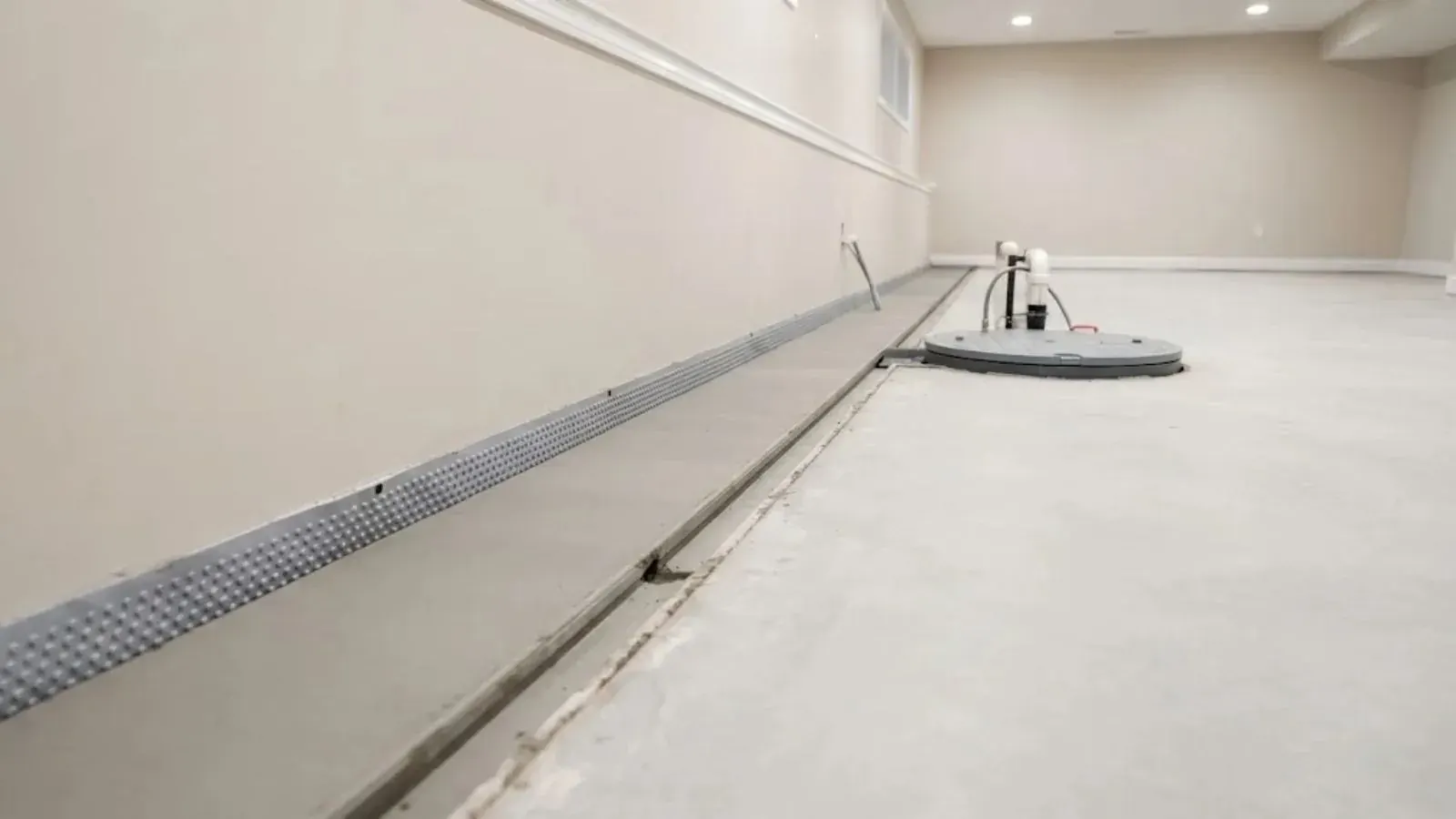
| Wall membrane (dimple board) | Gives water behind it a path down to the drain instead of into the room | Does not seal the wall and is not for structural cracks |
| Sump pit and pump | Lifts collected water out and away from the house | Needs power or a backup, and the discharge must clear the foundation |
| Crack injection | Epoxy or polyurethane fills a single non-structural crack | A repair for one crack, not a basement system |
| Gutter and grade fixes | Moves roof and surface water away before it reaches the wall | Does not help with a high water table |
Pairing matters. A drain with no pump has nowhere to send the water, and a pump with no drain only helps the corner where the pit sits. Our sump pump repair and installation work handles the pit side of the job.
A buried discharge line means digging, so call Indiana 811 at least two business days ahead.
What we do and what we send elsewhere
We handle
- Meter test and plumbing leak checks
- Interior drains and wall membranes tied to the pit
- Sump pit, pump, check valve and battery backup
- Discharge line routing away from the foundation
Call someone else
- Bowing or horizontally cracked walls (structural engineer)
- Exterior excavation and foundation wall repair (a foundation contractor)
- Grading the whole yard (an excavator or landscaper)
- Mold testing (an environmental tester)
What drives the cost of a dry basement
Price depends on how much of the floor we work in and how the water behaves. We walk the basement and give a clear price before work starts.
Homeowner policies usually exclude water that seeps through foundation walls or comes up from the ground, and they exclude flood. A sudden pipe burst is treated differently. Check your policy and ask your agent about water backup coverage.
Basement wet again after the last storm?
Describe where the water shows up and when. Our same-day appointments, when available, start with a meter test.
When to call right away instead of waiting for a visit
Standing water that is rising, a basement near the panel, or a pump that has stopped call for the emergency line. See emergency sump pump repair for that situation. The 24/7 line takes those calls at any hour. Planned waterproofing is booked for a daytime visit.
If the basement has a floor drain that gurgles or backs up, that may be the sewer and not groundwater. In that case, sewer line cleaning is the right page. Out in Morristown, the Morristown emergency plumber page has our coverage there.
If water is standing near the panel, outlets or the furnace, stay out of the basement and call 911 if anyone has been shocked. Wiring is a job for a licensed electrician.
Basement waterproofing questions in Shelbyville
Either. If the water meter keeps moving with all fixtures off, it is a pipe. If water appears after rain and the meter sits still, it is groundwater or surface drainage. We start with the meter test.
No. A dimple board membrane on the wall channels water down to a drain. It does not seal the wall. It works when paired with an interior drain and a sump pit.
Almost always. The drain collects water, and the pump removes it. Without a pit and pump the water has nowhere to go.
No. A drain system manages groundwater and rain seepage. River flood water can overwhelm any home near the Big Blue. Check the FEMA flood zone map and keep valuables off the floor.
You can brush off the powder, but it returns until the moisture source is fixed. Sealing paint over a wet wall peels within a season.
It depends on the length of wall and the slab thickness. Many jobs take a few days, including concrete cure time. We give you the schedule when we price the work.