The honest answer up front
A tank heater holds 40 to 50 gallons and sits on a 1/2 or 3/4 inch gas line and a simple flue. A tankless unit heats water on demand and fires at a much higher rate for a short time. That is why the gas line, the vent and the electrical supply all have to be right.
Most DIY problems are not the water connections. They are an undersized gas pipe that starves the burner, a vent that is the wrong material or length, and a missing condensate drain. Those errors cause error codes at best and carbon monoxide at worst. Gas and venting work on a tankless unit falls under the Indiana Plumbing Code, NFPA 54 and the maker's instructions, and that combined standard is the main reason this is not a casual DIY job.
| Task | DIY realistic? | Why |
|---|---|---|
| Draining and flushing an existing unit | Yes | Shutoff valves, a pump and white vinegar or descaler |
| Connecting hot and cold water with isolation valves | Maybe | Needs soldering, PEX crimps or push fittings, and correct valves |
| Running or resizing a gas line | No | Pipe sizing and leak testing, safety critical |
| Venting a gas unit | No | Material, slope, length and termination are all rules |
| Adding an electrical circuit for an electric unit | No, use an electrician | Large breaker, wire gauge and panel capacity |
| Condensate drain and neutralizer | Maybe | Needs a drain location and correct slope |
Gas tankless: where DIY stops
A typical whole-home gas tankless unit needs far more gas than a tank heater. If the existing line to the old heater was sized for 40,000 BTU per hour and the new unit asks for 150,000 or more, the line must be upgraded, sometimes all the way back to the meter. Pipe size depends on total load, length of run and number of fittings.
The vent is a second limit. High-efficiency units use plastic pipe such as PVC, CPVC or polypropylene, and the manufacturer lists the allowed material, size and maximum length. A wrong choice can leak exhaust. Terminations must also clear windows and intakes by set distances. Gas piping and appliance venting fall under the National Fuel Gas Code (NFPA 54) and the maker's manual, so the sizing and vent rules here are not optional.
A careful DIYer can reasonably do
- Flush a tankless unit with vinegar or descaler
- Replace a screen filter on the cold inlet
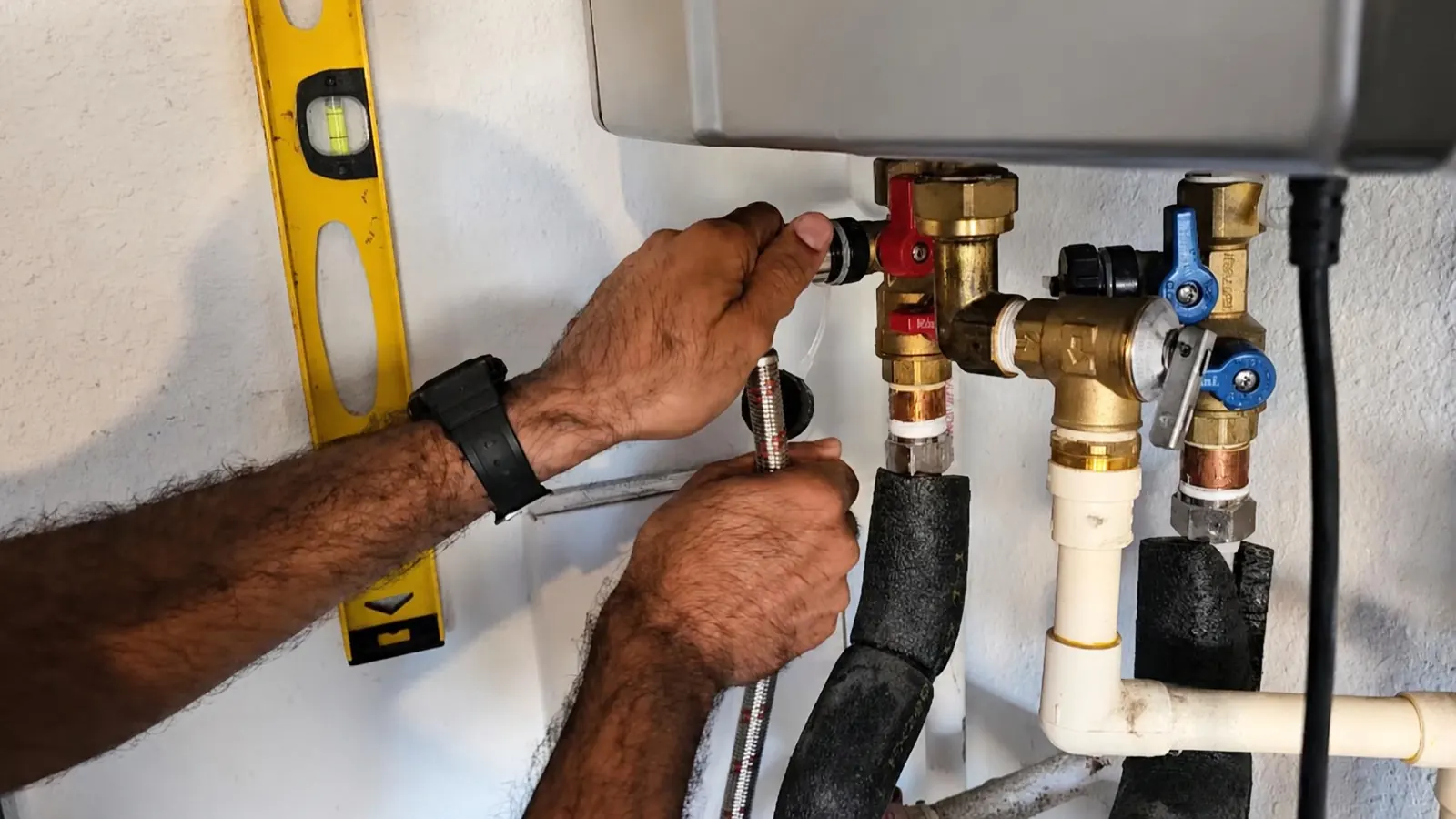
- Install isolation valves on an existing unit
- Swap an identical electric model on an existing correct circuit, where permitted
Leave to a licensed plumber or electrician
- Any change to the gas line or gas valve
- Any venting change, including a new roof or wall penetration
- A new 240 volt circuit or panel work
- Condensate neutralizer setup tied to a drain
- Pressure and combustion testing after install
Gas safety, no exceptions
If gas is involved, these rules protect your family.
- If you smell gas, leave the house at once and call 911 and your gas utility from outside
- Never test gas joints with a flame, use only an approved leak solution or a pressure test by a licensed pro
- Never run a unit with the vent disconnected or loose
- Install a working carbon monoxide detector on each level
- Do not relight a burner that locks out repeatedly, call a plumber
Permit and license rules in the city of Shelbyville
The City of Shelbyville says only plumbing contractors can apply for and obtain plumbing permits. Contractors must hold an active plumbing contractor license from the State of Indiana Plumbing Commission and register with the city. Homeowners working on a home they own and live in need no registration, but must obtain a permit before beginning any work.
That means a DIY tankless install in the city still needs a permit first, and the work is inspected. The state offers a license lookup page, so if you hire someone, search their name there. Outside city limits, the Shelby County Building Inspector and each town have their own rules, so ask the local building department.
Source type: City of Shelbyville Permits Contractors page and the State of Indiana license lookup.
The warranty and insurance angle
Many manufacturers tie their heat exchanger warranty to installation by a licensed professional, and some void it on a DIY install. Read the warranty sheet before you buy, not after you finish. Look for words like licensed installer, registration within a set number of days, and required annual flushing.
Your home insurer may also ask who did the work if a claim follows a gas or water incident. Unpermitted work can complicate that conversation. A permit and an inspection leave a record that the work met the code.
A sensible way to split the job
Size the unit before you shop
Add up the fixtures that run at once, such as two showers and a dishwasher. Flow in gallons per minute and the winter incoming water temperature decide the size.
Have the gas and venting reviewed
A plumber can measure the existing gas line and the vent path and tell you what must change before buying a unit.
Pull the permit
In the city, work is permitted through a registered plumbing contractor, or by you for your own home, before work begins.
Do the prep you can do safely
Clear the wall, remove the old tank only if you are able to drain and move it safely, and plan the drain location.
Have the gas, vent and final connection done and tested
A licensed plumber completes these, runs the combustion check and walks you through the flush schedule.
Weighing tankless before you buy?
Call the 24/7 line. A licensed plumber can review your gas line, vent path and electrical panel and give you a clear price first.
Electric tankless: easier, but not simple
An electric whole-home unit can draw 100 amps or more on a few 40 to 60 amp breakers, which many older panels cannot spare. In a house with a 100 amp service, that can be a dealbreaker. A smaller point-of-use electric unit under a sink may need only one breaker, and that suits a single bathroom or a far-off sink.
Either way, the wiring needs a licensed electrician, and the panel capacity should be confirmed first. Ask your electric provider whether service upgrades are needed. Our tankless water heater page covers unit types, and water heater installation covers planned swaps.
Serving nearby towns
Homeowners in Morristown and Fairland ask the same question, and the answer depends on the local permit office. Ask your building department about the permit before you order the unit.
DIY tankless install questions
The City of Shelbyville says homeowners working on a home they own and live in must obtain a permit before beginning any work. Only registered plumbing contractors can apply for permits for others. Ask the building department about inspection steps.
Often. Tankless units use more BTU per hour than a tank heater, so a line sized for a tank can be too small. A plumber measures the line and the total load before you buy.
Usually not. High-efficiency units use sealed plastic venting, and even non-condensing units have different vent needs. Check the manufacturer's vent table.
It can. Some brands require installation by a licensed professional. Read the sheet before you buy, and ask the maker if it is unclear.
Test your tap. If your water has a lot of minerals, scale can clog the heat exchanger, and a softener or regular flushing helps. Ask Indiana American Water for its annual water quality report.
The State of Indiana offers a license lookup page, and the city requires contractors to hold an active Indiana plumbing contractor license. Ask for the license and permit before work.