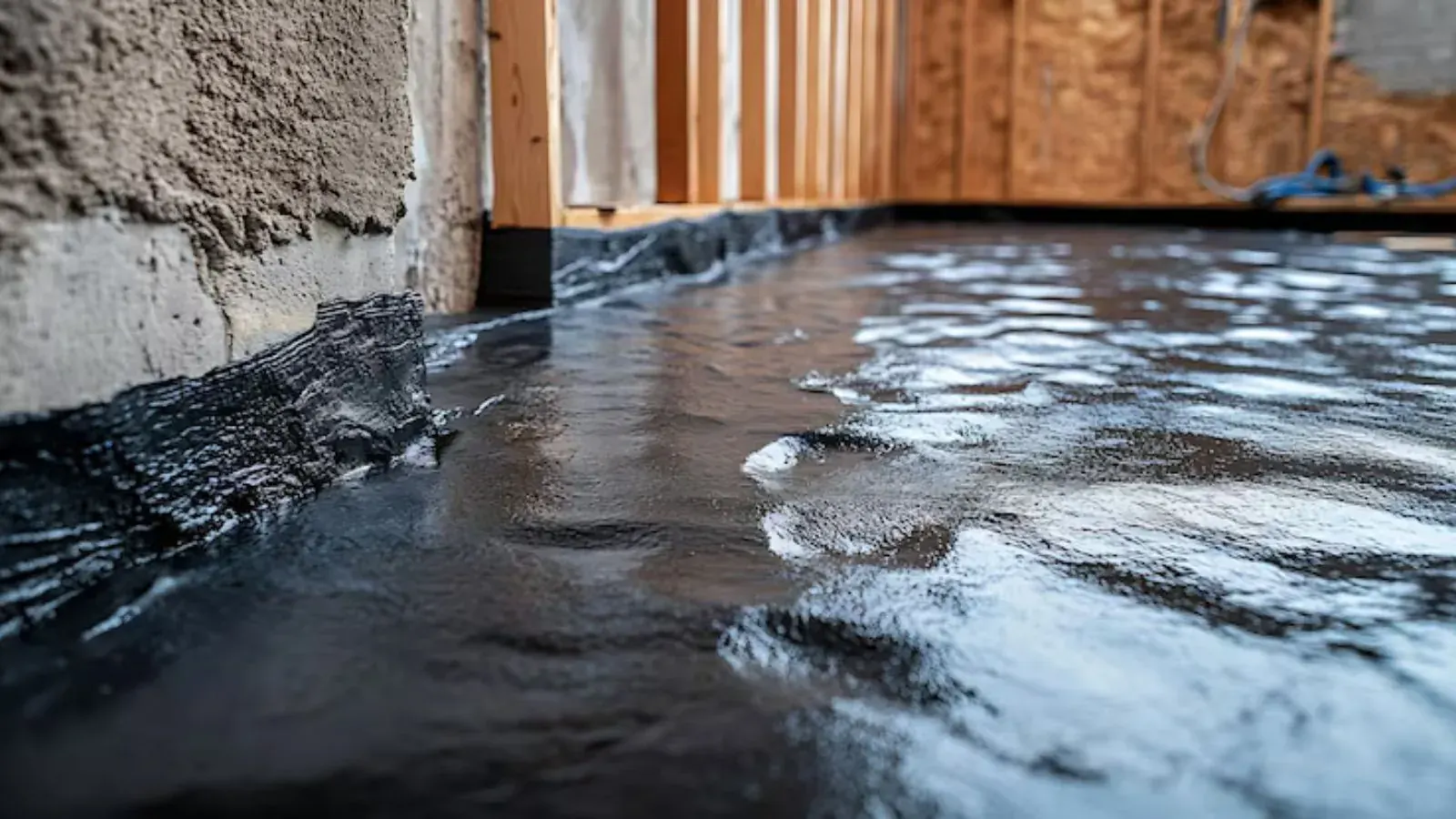
Exterior membrane or interior membrane
Exterior membrane
- Applied to the outside of the foundation wall during excavation
- Keeps water from soaking the wall in the first place
- Digging down the full wall height is the main cost and disruption
- Often paired with new footing drain tile and gravel
Interior membrane
- Plastic dimple sheet fastened to the inside wall
- Catches seepage and guides it down to a drain channel
- No digging, so less yard damage
- Does not keep water out of the wall, only manages it
The difference matters for your wall. An exterior system stops water at the outside face, but it means digging the full wall height, and Indiana 811 needs a call at least two business days before any dig. An interior membrane lets water reach the wall and then steers it to the floor drain and sump.
Neither is a coating you can roll on and forget. Paint-on sealers help with damp, not with flowing water. Where a membrane system drains to a sump, the pump and discharge line follow Indiana Plumbing Code guidelines, so ask how the discharge will be routed.
What the pieces of a system do
| Part | Role | Where it fits |
|---|---|---|
| Membrane or dimple sheet | Gives seepage a path down the wall | Wall surface, inside or outside |
| Drain tile (perforated pipe) | Collects water at the footing | Along the footing, inside or outside |
| Sump basin and pump | Moves collected water outside | A low corner of the basement, see sump pump service |
| Wall crack repair | Seals active leaks at cracks | Crack injection, inside or out |
| Exterior grading and gutters | Keeps roof and yard water off the wall | Outside, around the house |
What a membrane does not do
It does not lower the water table
If groundwater rises around the house, a membrane only guides what gets in. The water still needs a pump.
It does not fix a bad grade
Soil sloping toward the house or clogged gutters can overwhelm any wall system.
It does not seal floor-wall joints
Water often enters at the cove joint. Without a drain channel there, it spreads across the floor.
It is not a flood barrier
River floods can lift water over the sill or through windows. A membrane is not rated for that.
It does not repair structural cracks
A stair-step crack or bowed wall needs an engineer's opinion first.
Seepage that appears days after a rain points to groundwater and soil drainage. Water that appears during a storm often comes from roof runoff or a downspout. A basement that is wet while the weather is dry can point to a supply leak or a failed drain, which is a plumbing problem, not a wall problem.
Write down when the water shows up. That single note often tells a plumber whether you need drain tile, a pump or a pipe repair.
How an interior system goes in
Find where water enters
A plumber or waterproofer checks cracks, the cove joint, window wells and downspout discharge before choosing a fix.
Open a channel at the floor edge
A saw cuts a strip of slab along the wall. Gravel and perforated pipe go in the trench.
Fasten the dimple sheet
The membrane runs from the wall down into the drain channel so seepage has a path.
Tie into a sump pit
The pipe slopes to the basin. The pump pushes water out through a discharge line with a check valve.
Patch and finish
Concrete closes the trench. Walls can get a vapor-permeable finish, never trapped drywall in a wet spot.
River-adjacent water and what mapping shows
Shelbyville sits at the fork of the Big Blue and Little Blue Rivers. The U.S. Geological Survey publishes flood-inundation maps for a 4.1 mile reach of the Big Blue River at Shelbyville, covering stages from 9.0 to 19.4 feet.
The City of Shelbyville's flood page links the FEMA flood zone map and calls areas near Boggstown Road, County Road 100 North, Sunset Park and Bear Chase Golf Course a high-risk flood zone. Look up your address before choosing a system, because a membrane is not designed for floodwater entering from outside.
The National Weather Service logged a 19.98 foot crest on April 6, 2025, above the top mapped stage of 19.4 feet. In a year like that, plan on groundwater pressure, not just damp walls, and ask your plumber how the pump, backup power and wall system work together.
Source type: USGS flood-inundation study, NWS Indianapolis flood summary and City of Shelbyville Flood Preparedness page
Water coming through the wall?
Call the 24/7 line. A plumber can tell whether you have seepage, a failed pump or a groundwater problem, and which fix fits.
Before you pay for a membrane
Rule out the cheap causes first.
- Extend downspouts 6 feet or more from the wall
- Clear gutters and check for splash blocks
- Look for a sump pit and test its pump
- Note where and when water appears after rain
- Photograph cracks and efflorescence
- Ask for a written scope before work starts
We serve basements in Morristown and Fairland as well as in Shelbyville. Water that enters near a floor drain may also point to a plumbing leak, so a leak detection visit can rule that out.
Basement membrane questions
It is a water management system. It does not keep water out of the wall. It collects it and sends it to a drain and pump, which works well when paired with drain tile and a sump.
It can reduce moisture on the walls, but humidity also comes from the floor and air. A dehumidifier and a sealed sump lid usually help.
Some DIY sheet kits exist, but cutting a floor trench and tying into a sump is plumbing work. Hire a licensed plumber for drain and pump tie-ins.
Most interior systems need one, because the collected water has to go somewhere. A gravity outlet works only if the lot slopes away.
Stair-step cracks in block, horizontal cracks, and bowed walls need a structural opinion. Do not just cover them with a membrane.
The City of Shelbyville Flood Preparedness page links the FEMA flood zone map. Check your address there before choosing a system.